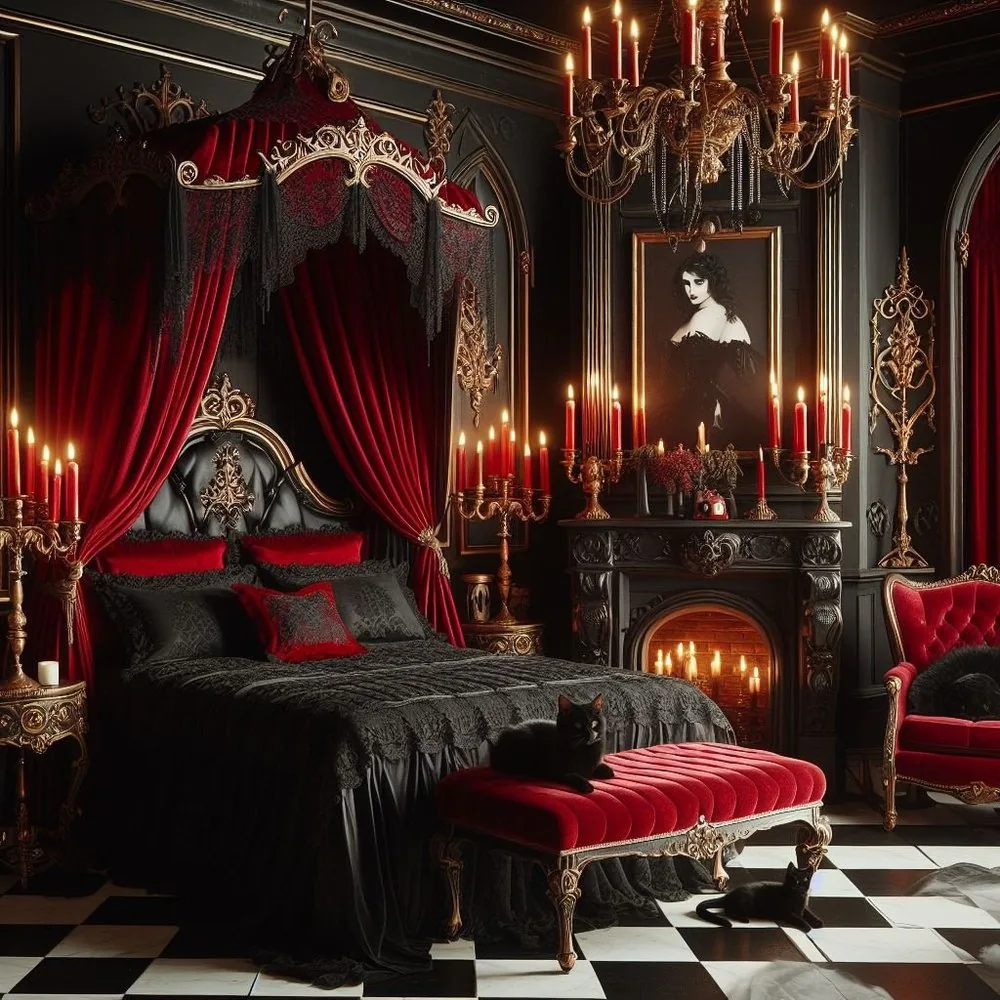

A small bedroom can borrow the feeling of a library without trying to contain one. Think about the places you use every day: the route around the bed, the surface for a glass of water, the chair where clothes tend to gather. The dark academia guide offers a palette of ink, walnut and paper. In a bedroom, those colours work best when the practical layout comes first.
Choose the corner that already has a purpose
Look for a bedside table, a chest top or a compact desk that could become the room’s main moment. Keep the other surfaces simpler. A single reading corner gives the eye somewhere to settle; repeating a complete display on every piece of furniture makes a small room feel busy. Photograph the space in daylight and again with the lamps on before changing it.
Borrow the layered timber and book colours from the library room board, rather than its full scale. The softer mood in a crimson kind of quiet can help if you want the bedroom to feel more restful. Mixing those influences is entirely reasonable. A room does not need to pass a style test to be yours.
Keep the bedside surface genuinely usable
Set down the things you need at night before arranging anything decorative. Make space for water, glasses and the book you are actually reading. If the table is narrow, a large lamp may be the wrong choice even when its colour is perfect. Measure the base and the shade, and check where the cable will run without crossing the route beside the bed.
The green glass banker’s lamp (Amazon UK affiliate link) is 27.5 cm wide and 39 cm high. It suits a deeper chest or desk better than some tiny bedside tables. The E27 bulb is separate, with a listed maximum of 40W. Choose only within the fitting’s instructions, and check the light from your reading position. Keeping an existing lamp is a sensible option if it already does that job well.
Use books as part of daily life
Keep a small current selection close to the bed and the rest wherever your storage works best. An open page on the Cambridge book stand (Amazon UK affiliate link) can make a chest or desk feel personal, but its 29 by 22 cm footprint still needs to fit. Fold it away when the surface is needed for another task. It is a support for reading, rather than a reason to keep every surface occupied.
A walnut pen cup (Amazon UK affiliate link) makes sense where you write or keep a journal. It makes less sense on a crowded bedside table with nothing to hold. Our bookshelf styling guide explores arranging a useful collection, while the reading-corner guide helps decide whether a separate chair will earn the floor space.
Build the colour through layers you can move
Warm brown wood, an olive cushion and a pale bedcover can carry the mood without changing the walls. The forest-green velvet covers (Amazon UK affiliate link) are one option for an existing chair or bed. They are covers, so check the size and keep or source suitable inserts separately. A couple of well-chosen layers are easier to live with than a bed buried under decorative cushions.
Use a black fleece throw (Amazon UK affiliate link) where you will actually reach for it. Its smooth everyday fabric has a different character from velvet, which can make the room feel less staged. Test darker textiles in your own daylight before assuming everything should be black. A lighter sheet, wall or lampshade helps separate the shapes and makes the richer colours easier to see.
Give one curious object enough space
If there is a shelf above the desk, the vintage-colour globe (Amazon UK affiliate link) can introduce a scholarly note. Check its 27.5 cm overall height and leave room for it to rotate. It is optional: the same feeling might come from a framed postcard or an old notebook that already means something to you. Avoid creating a precarious display above the bed simply to finish the theme.
End with a real evening in the room. Can you open the drawers, put down a drink and get to the bed without moving the styling? Keep the parts that make that evening nicer. If changes need to remain portable, follow our rented-home guide. For a desk that shares the bedroom, the home-office guide keeps work and atmosphere in proportion.
Product notes are selection guidance, not claims of hands-on testing. Room and story images illustrate a mood; product cards show the selected item and link straight to its Amazon UK listing.