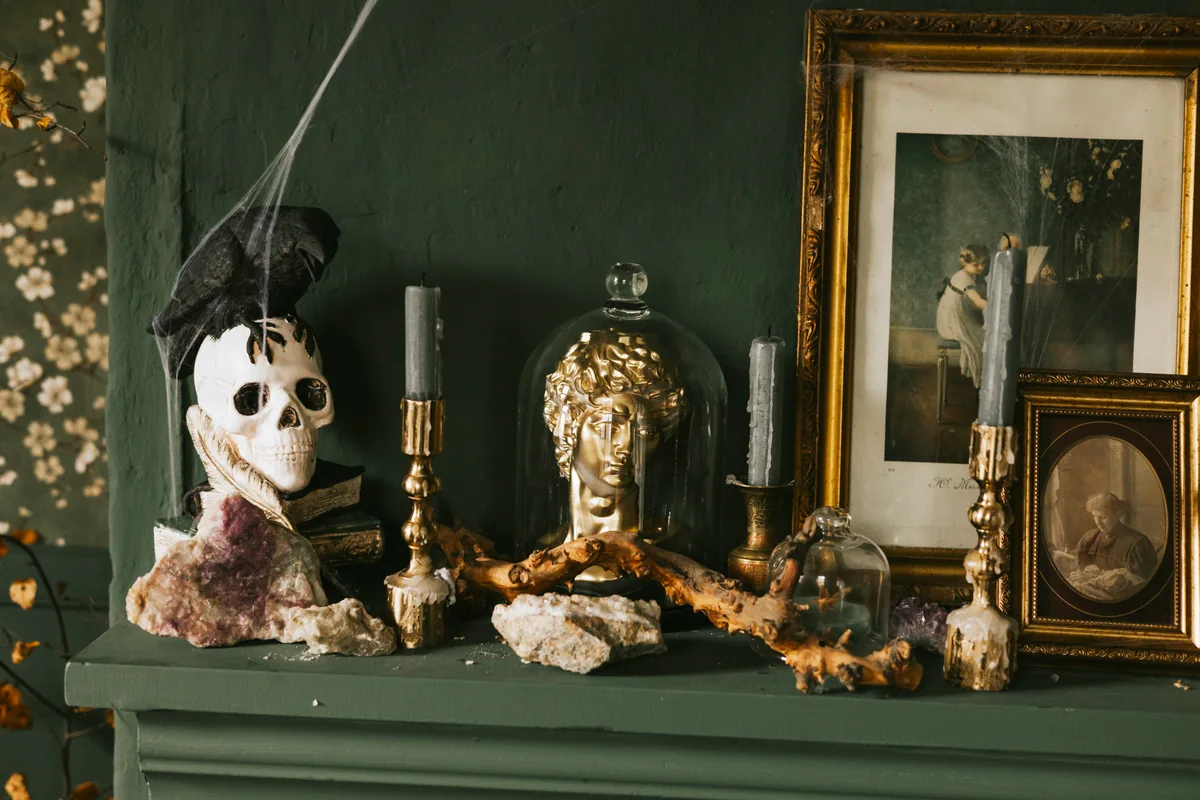
A dark academia bookshelf should still be a place to find a book. The atmosphere comes from a useful collection, the shapes of the bindings and a few objects that look as though they belong there. Start with the dark academia style guide for the palette, then look at your own shelves before adding anything. The most useful change may be moving the books you reach for into better light.
Give the collection a readable order
Empty one shelf at a time and separate the books you use from those you simply want to keep. Arrange the useful group by subject, author or whatever system you will remember next week. Matching the spines by colour can look lovely, but it loses its appeal when a favourite disappears into the wrong section. Keep oversized books where their full depth is supported.
Stand most books upright, with a small horizontal stack where the shelf has room for it. Put the largest volume at the bottom and keep the stack low enough to lift comfortably. Dark bindings look richer beside the occasional pale spine. You do not need to turn every book backwards or replace covers to get a more coherent composition.
Let one object interrupt the line
A bronze-tone desktop globe (Amazon UK affiliate link) brings a rounded shape into a run of rectangular books. This Exerz version has a 20 cm globe and stands 27.5 cm high overall, so allow for the complete stand rather than measuring only the sphere. The vintage colouring is a decorative treatment on a new object. Place it where it can turn without brushing a fragile neighbour.
If the globe fills too much space, use something you already own: a small framed photograph, a ceramic cup or a box with a personal history. The Chelsea picture frame (Amazon UK affiliate link) is another way to introduce an old-fashioned outline. Check the photograph size and the space needed by the back support before choosing its position. One interruption is often enough.
Make an open page feel intentional
An open book can change the rhythm of a display without adding another ornament. The Cambridge folding book stand (Amazon UK affiliate link) gives the page an angled surface and folds away when you want the desk back. Its listed footprint is 29 by 22 cm, with three reading angles. Check that a large art book sits securely rather than letting its covers hang far beyond the support.
Use a book you enjoy looking through, and turn the page occasionally. Keep delicate paper out of strong direct sunlight and away from a source of heat. For upright books, the castle dragon bookends (Amazon UK affiliate link) offer a stronger sculptural alternative. They are a different visual decision from the quiet stand; try one approach before filling the shelf with both.
Put the useful light beside the display
The green glass banker’s lamp (Amazon UK affiliate link) connects the bookshelf to a working desk. Its colour can echo a green binding while the bronze-tone base brings warmth to dark timber. This model needs an E27 bulb, not supplied, and its listing gives a 40W maximum. Check the manufacturer’s instructions, the socket position and the cable route before deciding where it belongs.
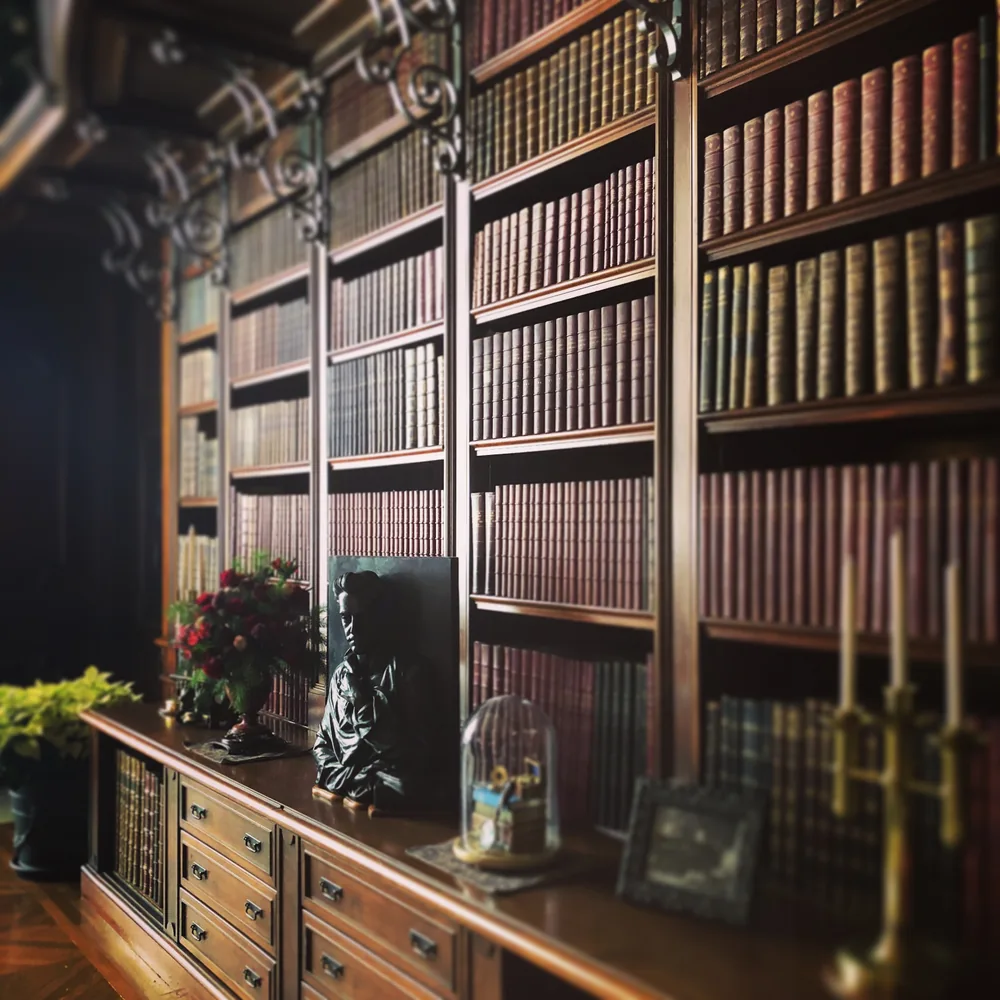
Sit in the place where you actually read and check what the light reaches. A handsome shelf should not leave the page in shadow. Our reading-corner guide looks at the chair and light together; the library room board shows the broader mood. Compare the midnight drawing room for a simpler outline around the same useful objects. Use the room photograph for atmosphere, rather than trying to identify every pictured object.
Leave a place for ordinary life
On a shelf above a desk, one small container can stop stationery spreading into the display. The walnut pen cup (Amazon UK affiliate link) is an 11 by 8 by 8 cm piece for everyday pens, with a smaller usable space inside. It is useful because it has a job. Leave room beside it for the notebook that is currently open and the book that has not quite made it back.
Finish by looking from the doorway, then reach for the three books you use most. If each comes out easily, the arrangement is doing its work. Follow the practical desk guide when the shelf shares your working area, or dark academia for a small bedroom when it also needs to settle quietly into the end of the day.
Product notes are selection guidance, not claims of hands-on testing. Room and story images illustrate a mood; product cards show the selected item and link straight to its Amazon UK listing.